I was asked an interesting question this weekend at a book signing. It came from a high school language arts instructor who plans to use these two sonnets in her poetry segment of class. She asked whether Sonnet No. 32, "Alfred, Lord of Tension," and Sonnet No. 40, "Jethro," were written about the same person.
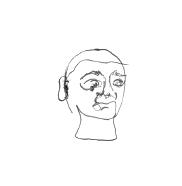
This is a good question. The short answer is: not really. During the final edits of the book, I noticed the similarities between the two poems. That realization ultimately led us to use the same illustration for each sonnet. While they share certain themes and imagery, they are very different works in both origin and purpose.
"Alfred, Lord of Tension" was intended as a tribute to the works of Alfred, Lord Tennyson. I once had an instructor who was absolutely infatuated with Tennyson and became increasingly frustrated with students who did not share that enthusiasm. Although I found Tennyson's work complex and intellectually engaging, I never quite reached the level of admiration my instructor possessed. In fact, I still remember falling asleep during a classroom discussion of "Ulysses."
Nevertheless, writing a proper tribute to such an important Victorian literary figure required considerable effort. I spent hours conducting research, revising drafts, and restructuring lines before I considered the sonnet complete. The poem took months to write. Beyond serving as a multilayered acknowledgment of Tennyson's enduring contributions to literature, it was also designed with a secondary purpose in mind: education.
Part of my hope was that the poem might eventually find its way into classrooms, where students could be challenged to identify the numerous references to Tennyson's work woven throughout the text. For those curious about the answer, there are sixteen total references to Tennyson's poetry within the sonnet.
"Jethro," by contrast, emerged under entirely different circumstances. It was written in a single evening after a particularly frustrating day spent dealing with a personal nemesis who occasionally seems determined to make my life more difficult than necessary. Unlike "Alfred, Lord of Tension," this poem was not the product of months of research and refinement. It arrived quickly and almost all at once, and was indeed written with a specific person in mind.
Looking back, it is entirely possible that Tennyson, and perhaps "Ulysses" in particular, weres still somewhere in the back of my mind when I wrote "Jethro." That may explain the similarities. However, I can say with confidence that I was not thinking about Jethro when I wrote “Alfred, Lord of Tension.
This is a good question. The short answer is: not really. During the final edits of the book, I noticed the similarities between the two poems. That realization ultimately led us to use the same illustration for each sonnet. While they share certain themes and imagery, they are very different works in both origin and purpose.
"Alfred, Lord of Tension" was intended as a tribute to the works of Alfred, Lord Tennyson. I once had an instructor who was absolutely infatuated with Tennyson and became increasingly frustrated with students who did not share that enthusiasm. Although I found Tennyson's work complex and intellectually engaging, I never quite reached the level of admiration my instructor possessed. In fact, I still remember falling asleep during a classroom discussion of "Ulysses."
Nevertheless, writing a proper tribute to such an important Victorian literary figure required considerable effort. I spent hours conducting research, revising drafts, and restructuring lines before I considered the sonnet complete. The poem took months to write. Beyond serving as a multilayered acknowledgment of Tennyson's enduring contributions to literature, it was also designed with a secondary purpose in mind: education.
Part of my hope was that the poem might eventually find its way into classrooms, where students could be challenged to identify the numerous references to Tennyson's work woven throughout the text. For those curious about the answer, there are sixteen total references to Tennyson's poetry within the sonnet.
"Jethro," by contrast, emerged under entirely different circumstances. It was written in a single evening after a particularly frustrating day spent dealing with a personal nemesis who occasionally seems determined to make my life more difficult than necessary. Unlike "Alfred, Lord of Tension," this poem was not the product of months of research and refinement. It arrived quickly and almost all at once, and was indeed written with a specific person in mind.
Looking back, it is entirely possible that Tennyson, and perhaps "Ulysses" in particular, weres still somewhere in the back of my mind when I wrote "Jethro." That may explain the similarities. However, I can say with confidence that I was not thinking about Jethro when I wrote “Alfred, Lord of Tension.